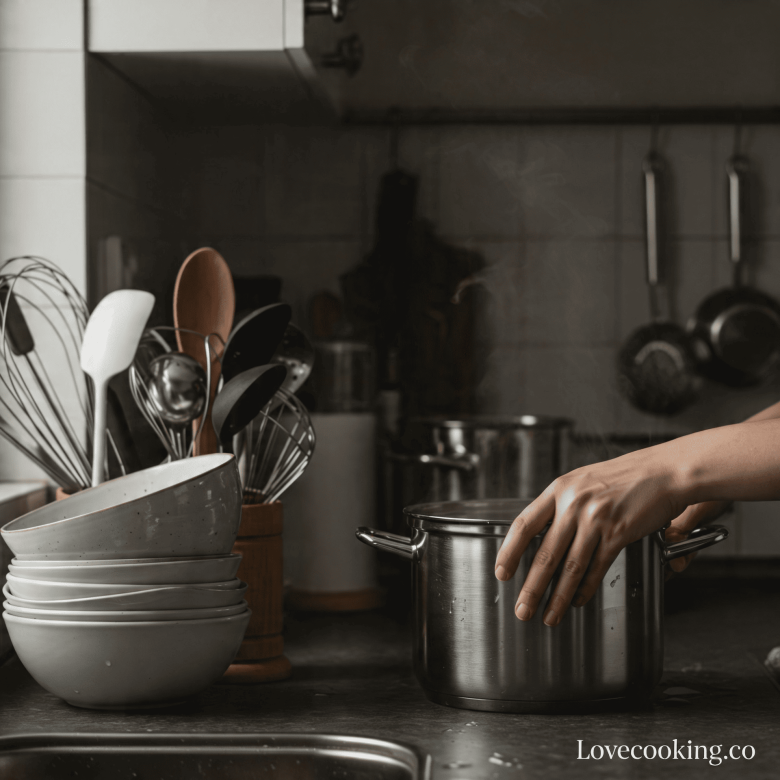
Most people don’t realize this, but cooking rarely feels slow because the actual cooking is slow. It feels slow because everything around it is unorganized, repeated, or done in the wrong order. Think about a typical evening: you come home tired, open the kitchen, start chopping vegetables, then realize you forgot to defrost something, then search for spices, then clean a pan, then go back to chopping again. Suddenly, a 30-minute meal turns into an hour-long struggle.
I’ve been there many times—standing in the kitchen wondering why something so simple takes so long. The truth is, speed in cooking isn’t about rushing. It’s about removing friction. The small delays—searching for ingredients, washing tools again and again, or cooking things in the wrong order—add up more than we think. Once you start noticing these patterns, you realize cooking speed is less about “skills of a chef” and more about “systems of a thinker.” And the good news? Anyone can build that system at home without expensive tools or professional training.
Why Your Kitchen Routine Slows You Down Without You Realizing It
If cooking feels slow, it’s usually because your process is reactive instead of planned. You start one task, then react to the next problem as it comes. This creates a cycle of interruptions that drains time and energy.
Here are a few common hidden slowdowns:
- Walking back and forth to grab ingredients
- Opening the fridge multiple times for forgotten items
- Chopping ingredients one by one instead of in batches
- Cooking everything on low heat out of caution
- Washing utensils repeatedly during cooking
What’s interesting is that none of these actions feel “big,” but together they create serious delays. A simple stir-fry meal can stretch from 20 minutes to 45 minutes just because of poor flow. The key shift is thinking like a “sequence planner.” Before you even turn on the stove, you should already know what happens first, second, and last. Professional kitchens don’t cook faster because chefs move faster—they cook faster because everything is pre-arranged in a logical sequence.
Once you understand this, cooking stops feeling chaotic and starts feeling predictable.
Setting Up Your Kitchen for Natural Speed (Without Creating Chaos)
A fast kitchen is not a messy kitchen. In fact, the faster you want to cook, the more organized your space needs to be. The concept that chefs use is called “mise en place,” which simply means everything in its place before cooking begins.
At home, this doesn’t have to be complicated. It can be as simple as:
- Washing and cutting all vegetables before heating the pan
- Keeping commonly used spices in one reachable spot
- Pre-measuring ingredients for recipes you cook often
- Keeping knives, boards, and pans in consistent locations
The goal is not perfection—it’s predictability. When your hands know where everything is, you stop wasting mental energy searching. One small habit that changes everything is “pre-cooking setup time.” Even just 10 minutes of preparation before turning on the stove can cut your total cooking time by 20–30%. That’s because you eliminate interruptions mid-process. A well-organized kitchen also reduces mistakes like burning food while you’re searching for salt or overcooking something while you’re chopping onions. Speed naturally improves when your environment stops fighting against you.
Meal Planning That Actually Saves Time Instead of Feeling Restrictive
Many people hear “meal planning” and immediately think of complicated diet charts or strict routines. But real-life meal planning is much simpler—and far more practical. It’s not about deciding every meal for the week. It’s about reducing last-minute decisions.
For example, instead of thinking “What should I cook today?” every evening, you can:
- Decide 3–4 flexible meals for the week
- Reuse ingredients across multiple dishes
- Cook base items in bulk (like rice, boiled chicken, or sauces)
- Keep a backup “quick meal list” for busy days
This reduces decision fatigue, which is one of the biggest causes of slow cooking. When you don’t waste time thinking, you start cooking immediately. A simple real-life example: if you know you’ll make chicken curry, grilled chicken, and chicken sandwiches in the same week, you can prep chicken once and use it in different ways. That alone saves significant chopping, cleaning, and cooking time. Good meal planning is not about restriction—it’s about removing unnecessary thinking during busy moments.
Knife Skills and Prep Habits That Quietly Double Your Efficiency
One of the most underrated factors in cooking speed is how you handle preparation. Knife skills are not just for professional chefs—they directly affect how fast and safely you cook at home.
But this doesn’t mean you need fancy techniques. It means developing consistency.
Here are a few practical improvements:
- Use a sharp knife instead of forcing a dull one
- Practice consistent chopping sizes so food cooks evenly
- Cut multiple ingredients at once instead of individually
- Group similar prep tasks together (all vegetables first, then spices)
What slows people down the most is switching between tasks too often. Every time you stop chopping to start cooking, then go back to chopping again, you lose momentum. Think of prep like building momentum before cooking begins. Once everything is ready, cooking becomes a smooth flow instead of a stop-start process. Even small improvements in prep habits can reduce your cooking time dramatically over a week. It’s not about speed in one moment—it’s about efficiency over time.
Cooking Techniques That Naturally Reduce Waiting Time
Cooking faster doesn’t always mean turning up the heat. In fact, smart timing matters more than high heat. Many home cooks wait unnecessarily because they don’t layer cooking steps properly.
A few practical techniques include:
- Start with ingredients that take the longest to cook
- Use multiple burners when possible
- Cover pans to speed up cooking without losing moisture
- Add ingredients in the correct sequence instead of all at once
- Learn when to multitask and when to pause
For example, if you’re making a simple vegetable and rice dish, you can start boiling rice while preparing vegetables. Instead of waiting for one step to finish completely, you overlap processes.
Another important habit is understanding heat control. Many people cook everything on medium heat “just to be safe,” but that often slows everything down unnecessarily. Learning when to use medium, high, or low heat depending on the dish can cut minutes off every meal. Cooking faster is less about urgency and more about timing awareness.
Using Kitchen Tools in a Smarter Way (Not Just Collecting Them)
Having more tools does not automatically make cooking faster. In fact, too many unused gadgets often slow people down because they create clutter and confusion.
Instead, focus on using a few essential tools effectively:
- A sharp chef’s knife for most chopping tasks
- A non-stick pan for quick cooking and easy cleanup
- A pressure cooker or instant pot for time-heavy dishes
- Measuring spoons for quick seasoning instead of guessing
- A large cutting board for organized prep space
The real advantage comes from knowing exactly when to use each tool. For example, a pressure cooker can turn a 40-minute lentil dish into 15 minutes of actual cooking time. But if you avoid it out of habit, you’re automatically increasing your cooking time. Also, reduce tool switching. Every time you change pans or utensils unnecessarily, you add cleaning time later. Efficient cooking is about minimizing transitions, not increasing complexity.
Common Mistakes That Make Cooking Slower Without You Noticing
Most cooking delays come from small, repeated habits rather than big errors. These mistakes are so common that people often assume they are normal.
Some of the biggest ones include:
- Starting cooking before reading the full recipe or plan
- Not defrosting ingredients in advance
- Overcrowding the cooking space
- Washing dishes during cooking instead of after or in batches
- Constantly adjusting heat instead of trusting the process
Another major mistake is multitasking without structure. Doing multiple things at once only helps when those tasks are coordinated. Otherwise, it leads to confusion and delays. A helpful mindset shift is this: cooking is not a race, it’s a sequence. When each step is placed in the right order, speed becomes a natural outcome. Once you remove these small mistakes, you’ll notice something surprising—your cooking time improves without you actually “trying” to cook faster.
Conclusion
Improving your cooking speed is not about rushing through meals or compromising quality. It’s about building a smarter system in your kitchen where preparation, timing, and organization work together naturally.
When you organize your space, plan simple meals, improve prep habits, and avoid common mistakes, cooking becomes faster almost automatically. You don’t need professional training—just consistency and awareness of how your time is being used.
Over time, these small improvements create a big difference. What once felt like a stressful hour in the kitchen can become a smooth, efficient 20–30 minute routine that still produces fresh, satisfying meals.
FAQs
1. How can I cook faster if I’m a complete beginner?
Start by organizing your ingredients before cooking and following a simple step-by-step routine. Focus on preparation first, not speed.
2. Does meal planning really help save cooking time?
Yes, even basic meal planning reduces decision time and last-minute confusion, which significantly speeds up cooking.
3. What is the biggest mistake that slows down home cooking?
Starting cooking without preparation is the biggest mistake. It causes interruptions and unnecessary delays.
4. Do expensive kitchen tools make cooking faster?
Not necessarily. A few basic, well-used tools are more effective than many unused gadgets.
5. How long does it take to improve cooking speed?
Most people notice improvement within 1–2 weeks of consistent practice and better kitchen organization.