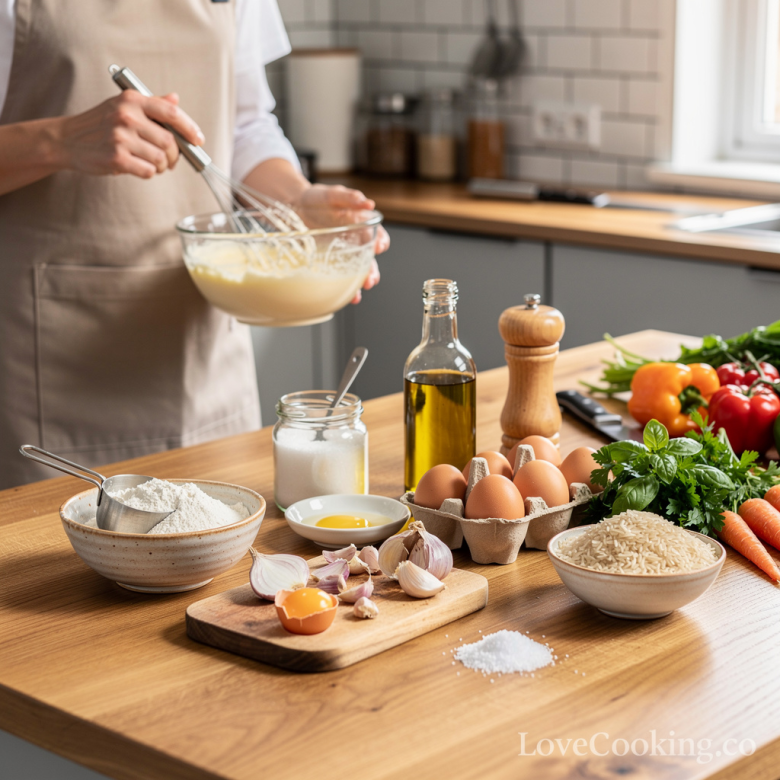
Cooking at home becomes much easier and more enjoyable when you understand the ingredients you use every day. Many beginners struggle in the kitchen not because recipes are too difficult, but because they don’t fully understand what each ingredient does or how it affects the final dish. Once you learn the purpose and behavior of basic cooking ingredients, everything starts to make more sense—your food tastes better, your cooking becomes more consistent, and you gain real confidence in the kitchen.
This guide is designed to help you understand basic cooking ingredients and their everyday uses in a simple, practical, and real-world way. No complicated science—just clear explanations you can actually apply while cooking.
Why Understanding Cooking Ingredients Matters in Everyday Life
Most people think cooking is just about following steps in a recipe. But in reality, cooking is about understanding how ingredients interact with each other.
When you understand ingredients properly, you can:
- Improve the taste of your food naturally
- Fix cooking mistakes without stress
- Adjust recipes based on what you have at home
- Cook confidently without depending on instructions all the time
For example, if a dish tastes bland, you’ll know whether it needs salt, acidity, or spice. If a sauce feels too thick or too thin, you’ll know what ingredient to adjust.
This knowledge turns cooking from guessing into understanding.
Flour: The Foundation of Many Everyday Foods
Flour is one of the most common ingredients found in almost every kitchen. It is used in bread, roti, cakes, pastries, and many other dishes.
Different Types of Flour and Their Uses
- Wheat flour (whole wheat): Used for roti, chapati, and healthy baking
- All-purpose flour: Used for cakes, biscuits, and soft bread
- Rice flour: Used in snacks and gluten-free recipes
- Gram flour (besan): Used for fritters, batter, and savory snacks
How Flour Works in Cooking
Flour provides structure to food. When mixed with water, it forms dough or batter, which holds everything together during cooking or baking.
Simple Tips for Better Use
- Always sift flour for baking to make it lighter
- Add water slowly while kneading dough
- Let dough rest to improve texture
Even small changes in how you handle flour can completely change the final result.
Rice: A Staple Ingredient in Many Kitchens
Rice is a daily food in many households, but getting the texture right can sometimes be tricky.
Types of Rice
- Basmati rice: Long, aromatic grains used for biryani and pilaf
- Short-grain rice: Slightly sticky, used for comfort meals
- Brown rice: More fiber-rich, takes longer to cook
How Rice Works in Cooking
Rice absorbs water and expands during cooking. The key is controlling water and heat properly.
Cooking Tips for Perfect Rice
- Wash rice to remove excess starch
- Soak it for 20–30 minutes (optional but helpful)
- Use correct water ratio
- Let it rest after cooking
When cooked correctly, rice becomes fluffy, soft, and separate.
Salt: The Most Important Flavor Enhancer
Salt is one of the simplest yet most powerful cooking ingredients. Without it, food tastes flat and incomplete.
What Salt Actually Does
Salt enhances natural flavors rather than just adding a salty taste. It balances sweetness, reduces bitterness, and brings out aroma in food.
Types of Salt in Cooking
- Table salt
- Rock salt
- Sea salt
How to Use Salt Properly
- Add in small amounts and adjust gradually
- Season at different stages of cooking
- Taste while cooking to avoid over-salting
Common Mistake
Adding salt only at the end of cooking often leads to uneven flavor. It works better when added gradually during cooking.
Cooking Oil: The Base of Flavor and Texture
Oil is not just for cooking—it plays a major role in flavor, texture, and aroma.
Types of Cooking Oils
- Sunflower oil (neutral taste)
- Mustard oil (strong flavor)
- Olive oil (light cooking and salads)
- Vegetable oil (general use)
What Oil Does in Cooking
- Prevents food from sticking
- Helps spices release flavor
- Adds richness and texture
Smart Usage Tips
- Don’t overheat oil until it smokes
- Use just enough to coat the pan
- Add spices when oil is warm, not cold
Using oil correctly can instantly improve your cooking results.
Onions: The Flavor Builder in Most Dishes
Onions are one of the most important ingredients in savory cooking. They create depth, sweetness, and aroma.
How Onions Change Flavor
Depending on how they are cooked:
- Raw onions give sharpness
- Lightly cooked onions add mild flavor
- Golden brown onions add sweetness and richness
Ways to Use Onions
- Chopped for curries
- Sliced for stir-fry
- Caramelized for rich gravies
Cooking Tip
Slow cooking onions gives better flavor than fast frying. Patience is key here.
Garlic: Small Ingredient with Big Impact
Garlic is used in almost every savory dish around the world. It adds strong aroma and depth.
How Garlic Works in Cooking
When garlic is crushed or chopped, it releases natural oils that give strong flavor.
Ways to Use Garlic
- Minced for strong flavor
- Sliced for mild aroma
- Roasted for sweet and soft taste
Important Tip
Avoid burning garlic. It turns bitter quickly and can spoil the dish.
Spices: The Heart of Flavorful Cooking
Spices are what turn simple ingredients into delicious meals. But they must be used carefully and in balance.
Common Everyday Spices
- Turmeric
- Cumin
- Coriander powder
- Chili powder
- Black pepper
How Spices Work
Spices release flavor when heated in oil or mixed with moisture. Each spice has its own role:
- Turmeric adds color
- Cumin adds earthiness
- Chili adds heat
- Coriander adds freshness
Smart Spice Usage
- Use small amounts first
- Combine spices for balance
- Avoid burning them in hot oil
Proper spice usage is what separates average cooking from great cooking.
Tomatoes: Natural Balance for Flavor
Tomatoes are widely used in cooking for their acidity, color, and freshness.
What Tomatoes Do in Cooking
- Balance spicy flavors
- Add natural tanginess
- Improve texture of sauces and gravies
How to Use Tomatoes
- Chopped for quick cooking
- Blended for smooth sauces
- Cooked until soft for full flavor release
Cooking Tip
Always cook tomatoes properly to remove the raw taste and improve richness.
Eggs: One of the Most Versatile Ingredients
Eggs are simple but extremely flexible in cooking.
Ways to Use Eggs
- Boiled for quick meals
- Scrambled for breakfast
- Fried for sandwiches
- Used in baking
Why Eggs Are Important
Eggs provide structure, moisture, and richness in both savory and sweet dishes.
Simple Cooking Tip
Do not overcook eggs—they become dry and rubbery.
Milk and Dairy Products: Adding Creaminess and Balance
Milk, yogurt, and cheese are commonly used in everyday cooking for texture and flavor.
How Milk Is Used
- In tea and coffee
- In sauces and desserts
- For creamy consistency
Yogurt Uses
- Marinades for soft texture
- Curries for creaminess
- Side dishes and dips
Cooking Tip
Avoid overheating dairy products to prevent curdling.
Lentils: Everyday Protein Source
Lentils are a staple in many kitchens and are easy to cook once understood properly.
Types of Lentils
- Red lentils (quick cooking)
- Yellow lentils (smooth texture)
- Green lentils (firm texture)
How Lentils Work
They absorb water and soften during cooking, forming a thick and nutritious base.
Cooking Tips
- Wash thoroughly
- Simmer slowly
- Season properly after cooking
Sugar: Not Just for Sweet Dishes
Sugar is often misunderstood as only a sweet ingredient, but it has many uses in cooking.
How Sugar Works
- Balances acidity in dishes
- Enhances flavor depth
- Helps caramelization in cooking
Where Sugar Is Used
- Sauces
- Baking
- Savory dishes (in small amounts)
Even a pinch of sugar can improve flavor balance.
Conclusion
Understanding basic cooking ingredients and their everyday uses is one of the most valuable skills in home cooking. When you know how flour builds structure, how spices create flavor, how onions and garlic form a base, and how oil and salt balance everything, cooking becomes much more predictable and enjoyable.
You don’t need expensive tools or complex techniques—just a clear understanding of what each ingredient does. With this knowledge, you can improve any recipe, fix mistakes easily, and cook with real confidence. Cooking is not about memorizing recipes; it’s about understanding ingredients and using them wisely.
FAQs
1. What are the most important basic cooking ingredients for beginners?
Flour, rice, salt, oil, onions, garlic, spices, and lentils are the most essential ingredients for everyday cooking.
2. How can I improve the taste of simple home food?
Focus on proper seasoning, using fresh spices, and cooking ingredients like onions and garlic correctly.
3. Why do my dishes sometimes taste bland?
This usually happens due to under-seasoning or improper use of spices and salt during cooking.
4. How do I store basic cooking ingredients properly?
Store dry ingredients in airtight containers and keep spices away from heat and moisture.
5. Can I cook good food with only basic ingredients?
Yes, simple ingredients can create delicious meals when used with the right techniques and balance.