We’ve all been there.
You reach into the fridge, pull out a bag of spinach or a forgotten vegetable, and realize it’s no longer usable. It’s frustrating—not just because of the food, but because it feels like wasted effort and money.
I used to think such an incident was just part of buying fresh ingredients. I assumed things would go disastrously quickly no matter what I did.
But over time, I started paying attention to how I was storing food—not just what I was buying. That small shift made a bigger difference than I expected.
Now, my ingredients last longer, I waste less, and I don’t feel like I’m constantly restocking the same items.
In this guide, I’ll share the simple storage habits that actually worked for me.
Why Food Storage Matters More Than We Think
Good storage isn’t about perfection—it’s about small habits that add up.
When food is stored properly:
- It stays fresh longer
- It keeps its texture and flavor
- You reduce unnecessary waste
- You save money over time
The goal isn’t to make food last forever but to give it a fair chance to be used.
1. Fresh Produce: Let It Breathe (But Not Too Much)
One of the biggest mistakes I used to make was leaving vegetables sealed in the same plastic bags they came in.
That often traps moisture, which can lead to faster spoilage.
Leafy Greens (A Simple Method That Works)
Leafy greens tend to go bad quickly, mostly because of excess moisture.
What I do now:
- Wash them soon after buying
- dry them as much as possible
- store them in a container with a paper towel
The paper towel absorbs extra moisture, which helps keep the leaves fresh for longer.
Fresh Herbs (Treat Them Gently)
Herbs can be tricky, but a small change makes them last longer.
- For soft herbs like cilantro or parsley:
→ I place them in a small container with a bit of water
→ loosely cover them and store in the fridge - For herbs like basil:
→ I keep them at room temperature
→ away from cold air
This keeps them usable for several more days.
2. What Belongs in the Fridge (And What Doesn’t)
I used to think everything should go in the fridge. That’s not always helpful.
Some foods actually lose quality when stored in frigid temperatures.
Tomatoes
Keeping tomatoes in the fridge can change their texture and flavor.
What works better for me:
- store them at room temperature
- keep them away from direct sunlight
Potatoes and Onions (Keep Them Separate)
Both need a cool, dry place—but not together.
Storing them separately helps prevent faster spoilage.
I usually keep:
- potatoes in a dark cupboard
- onions in a basket with airflow
Bread
Refrigerating bread can make it dry out faster.
Instead:
- I keep small amounts at room temperature
- Freeze extra slices for later use
This way, I always have fresh bread available when I need it.
3. Using the Fridge More Effectively
Most of us use the fridge without really thinking about how it’s organized.
A few small changes made mine much more efficient.
Understanding the Drawers
Many fridges have drawers designed for different types of produce.
- higher moisture → for leafy vegetables
- lower moisture → for fruits
Using them properly helps maintain freshness.
A Simple “Use First” Section
Creating a small section for items that need immediate use has helped me reduce waste.
Whenever something is close to going disastrously, I place it in a visible spot.
This way, I’m more likely to use it instead of forgetting about it.
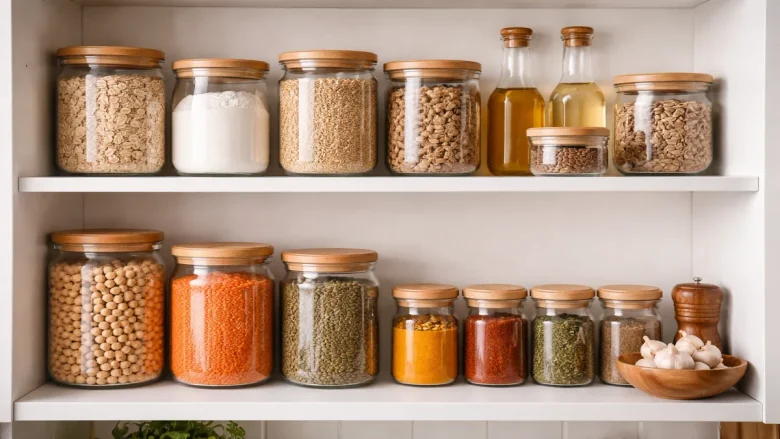
4. Pantry Storage: Small Upgrades That Help
Dry ingredients often come in packaging that isn’t ideal for long-term storage.
Switching to better containers made a noticeable difference for me.
Why Airtight Containers Help
They:
- protect against moisture
- keep ingredients fresher
- make everything easier to see
What I Store Differently Now
- flour → in sealed containers
- sugar → in airtight jars
- grains → in clear containers
This also makes my pantry easier to organize and manage.
5. The Freezer: A Practical Backup Plan
I used to underuse my freezer, but now it’s one of the most helpful parts of my kitchen.
Freezing Extra Ingredients
Whenever I have extra food I can’t use immediately, I freeze it.
Common examples:
- chopped vegetables
- leftover cooked food
- extra herbs
Ginger and Garlic
These two work especially well in the freezer.
- Frozen ginger can be grated directly
- Garlic can be prepped and stored in small portions
This saves time and reduces waste.
Keeping a “Scrap Bag”
Sometimes I store vegetable leftovers like
- onion ends
- carrot peels
- celery pieces
Later, I use them to make a simple homemade stock.
It’s an easy way to use things that might otherwise be thrown away.
6. Storing Dairy and Protein Properly
These items need a bit more attention because they spoil faster.
Milk
Instead of keeping milk in the fridge door, I place it deeper inside where the temperature is more stable.
Cheese
Wrapping cheese too tightly can cause moisture buildup.
I try to:
- wrap it in breathable material
- store it in a slightly open container
This helps it last longer without drying out.
Meat
If I’m not planning to use meat soon, I freeze it.
One useful trick:
- flatten it before freezing
This makes it easier to store and quicker to thaw.
7. Preventing Pantry Issues
I didn’t think much about pantry problems until I had to deal with them.
Now I take a few simple precautions.
Basic Prevention Steps
- Keep the pantry clean and dry
- avoid leaving items open
- Use sealed containers
A Small Habit That Helps
Occasionally, I freeze certain dry goods briefly before storing them long-term.
It’s a simple step that gives me peace of mind.
8. Small Habits That Made the Biggest Difference
Looking back, these are the changes that helped me the most:
- Drying produce before storing
- keeping certain foods out of the fridge
- organizing the fridge better
- using the freezer more often
- storing dry goods properly
None of these are complicated, but together they make a big impact.
9. Saving Money Without Trying Too Hard
One unexpected benefit of better storage is saving money.
When food lasts longer:
- You buy less frequently
- You waste less
- You use what you already have
It’s not about strict budgeting—it just happens naturally.
10. Start Small and Build Your Routine
You don’t need to change everything at once.
A simple way to begin:
- Try one storage method (like paper towels for greens)
- Reorganize one shelf in your fridge
- store one ingredient differently
Over time, these small changes turn into habits.
Final Thoughts
For me, improving food storage wasn’t about buying special tools or changing everything overnight.
It was about paying attention to what works.
Now, my kitchen feels more organized, my food lasts longer, and I don’t deal with as much waste as before.
If you try even one or two of these ideas, you’ll likely notice a difference.
And once you do, it becomes much easier to build a system that works for you.