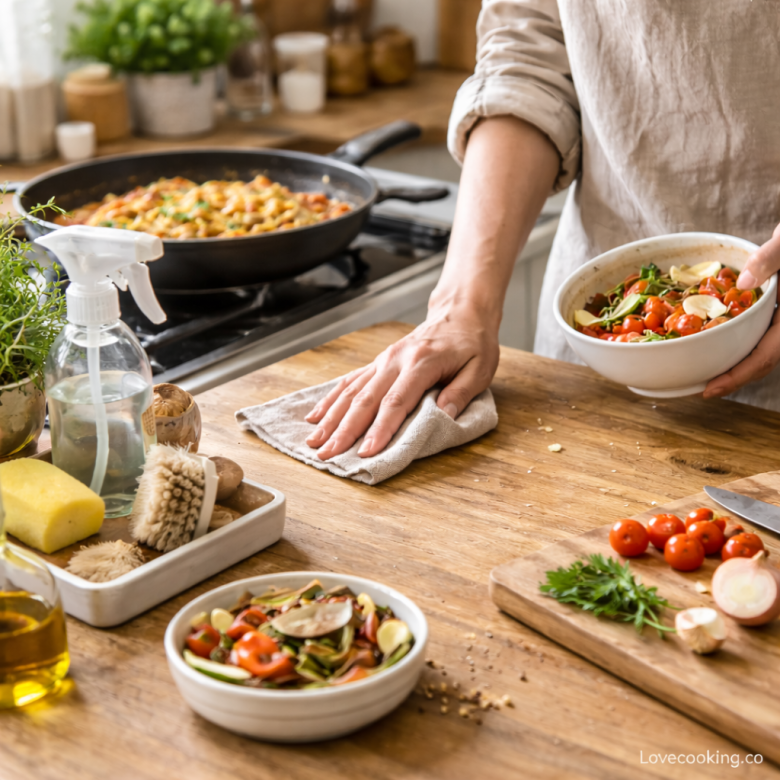
If there’s one thing most people quietly struggle with in the kitchen, it’s not cooking—it’s the mess that comes after it. You start with a clean counter, a good mood, maybe even a simple recipe in mind. But within 20 minutes, there are onion peels on one side, oil splatters near the stove, a cutting board stuck with spice stains, and a sink slowly filling up with used utensils. It doesn’t happen because you’re careless. It happens because cooking naturally creates mess. The real challenge is not avoiding mess completely—it’s learning how to manage it while you cook so it never feels overwhelming.
I still remember a phase when I would cook dinner and promise myself, “I’ll clean everything after eating.” But by the time I finished eating, the kitchen looked even more intimidating. That’s when I realized something simple but powerful: kitchen cleanliness is not a final task—it’s part of the cooking process itself.
Once that mindset shifts, everything changes. Cooking becomes lighter, faster, and surprisingly more enjoyable.
Why Most Kitchen Mess Happens Faster Than You Expect
A messy kitchen doesn’t suddenly appear at the end of cooking. It builds quietly during every step. The main issue is that most people focus entirely on the recipe and ignore the “mess trail” they’re creating.
For example:
- You chop vegetables but leave peels on the counter
- You use a spoon and place it anywhere temporarily
- You open multiple ingredients but never close or organize them
- You cook while also trying to clean, but inconsistently
Each small action seems harmless. But together, they create a layered mess that feels difficult to handle later.
Another reason is timing. When you cook without a system, cleaning gets delayed. And delayed cleaning always feels heavier than immediate cleaning.
The key realization is simple: mess is not the enemy. Disorganized habits are.
Once you start noticing how mess is created in real time, you can start preventing it in real time too.
Setting Up a Clean Cooking Mindset Before You Even Start
Before touching a single ingredient, your mindset plays a bigger role than most people realize. A clean kitchen is not maintained by cleaning—it’s maintained by awareness.
Think of it like this: every cooking session has two parallel processes happening at once—preparing food and managing space. If you only focus on food, the space suffers.
A helpful habit is mentally preparing your cooking flow:
- What will I use first?
- What can I put away immediately after using?
- Where will waste go as I cook?
- Which tools can I reuse instead of switching constantly?
Even taking 30 seconds to think like this can reduce half the mess that usually happens.
Another powerful mindset shift is accepting small cleaning actions during cooking as normal. You are not “stopping” cooking to clean—you are maintaining your cooking environment.
Once you stop seeing cleaning as a separate task, your kitchen naturally stays more organized.
The “Clean As You Go” Method That Changes Everything
One of the most effective habits for a clean kitchen is what many home cooks eventually learn the hard way: clean as you go.
But most people misunderstand this. It doesn’t mean stopping every minute to wash everything. It means building small cleaning actions into your cooking flow.
For example:
- While something is boiling, wipe the counter
- After chopping, immediately clear scraps into a bowl or bin
- After using a spoon, rinse it instead of stacking it
- During waiting time, organize ingredients instead of standing idle
This approach works because it prevents mess from accumulating.
A real-life example: imagine cooking pasta. Instead of letting water boil while standing idle, you could clean the cutting board or put away unused ingredients. By the time the pasta is ready, your kitchen is already halfway clean.
The secret is timing. You don’t need extra time—you just need to use waiting time better.
Over time, this habit becomes automatic, and your kitchen stops reaching “mess peaks” altogether.
Smart Prep Habits That Prevent Most Kitchen Clutter
A clean kitchen starts long before cooking begins. Preparation is where most mess is either prevented or created.
One simple habit that makes a huge difference is “organized prep zones.”
Instead of chopping and mixing everything randomly, try dividing your space:
- One area for chopping
- One area for ingredients
- One small space for waste
- One clear space for finished prep items
This alone reduces chaos significantly.
Another practical habit is pre-cleaning your space. Before cooking, even a quick wipe of the counter and sink sets a clean base. It feels small, but it mentally prepares you to stay organized.
You can also reduce mess by prepping smartly:
- Chop ingredients in order of use
- Use one board for similar items instead of switching repeatedly
- Keep a small bowl for scraps instead of scattering them
- Measure ingredients beforehand to avoid mid-cooking searches
When prep is structured, cooking becomes predictable. And when cooking is predictable, mess naturally reduces.
Managing Waste Properly While Cooking (The Most Ignored Habit)
One of the biggest reasons kitchens get messy quickly is waste management. Most people don’t think about where scraps, peels, wrappers, or used tissues should go during cooking.
So they end up scattered across the counter.
A simple solution is creating a “temporary waste zone.” It doesn’t need anything fancy—just a bowl, bag, or small container placed in one fixed spot.
Use it for:
- Vegetable peels
- Egg shells
- Packaging waste
- Used tissues or paper towels
The goal is to avoid spreading waste across multiple surfaces.
Another useful habit is emptying this waste zone during natural pauses in cooking. For example, while waiting for something to boil or cook, you can quickly clear it.
This prevents buildup and keeps your workspace visually clean, which also reduces stress while cooking.
A clean waste system is often the difference between a tidy kitchen and a chaotic one.
Keeping Your Cooking Area Under Control in Real Time
The cooking zone—stove, pans, and nearby counter—is where most mess happens quickly. Oil splatters, spice spills, and overflowing pots can make this area messy fast.
Instead of trying to fix everything later, it helps to control it as it happens.
Some practical habits include:
- Keep a cloth or paper towel nearby for quick wipes
- Use lids while frying or sautéing to reduce splatter
- Avoid overcrowding pans, which causes spills
- Clean small spills immediately instead of letting them dry
Another helpful trick is “one-pan awareness.” Try not to use more cookware than necessary. Every extra pan means more cleanup later.
Also, be mindful of seasoning habits. Pouring spices directly over hot pans often leads to spills. Measuring or pre-placing them reduces mess significantly.
Think of your cooking area as a controlled space, not a free zone. The more you maintain it in real time, the less cleanup you face later.
The Power of Small Cleaning Breaks During Cooking
Many people assume cleaning happens after cooking. But in reality, small cleaning breaks during cooking are what keep the kitchen manageable.
These breaks don’t need to be long. Even 30–60 seconds of focused cleaning can reset your space.
For example:
- While food simmers, wipe nearby surfaces
- While waiting for water to boil, wash one or two utensils
- While food is finishing, organize ingredients back into place
These short actions prevent buildup.
The interesting part is psychological. A clean space while cooking reduces mental load. You feel calmer, more in control, and less rushed.
Instead of ending cooking with a mountain of dishes, you finish with just a few items to handle.
This habit alone can transform how you experience daily cooking.
Building a Kitchen Routine That Naturally Stays Clean
Long-term cleanliness is not about effort—it’s about routine. When your kitchen habits are consistent, cleanliness becomes automatic.
A simple daily routine could look like:
Before cooking:
- Clear counter space
- Set up ingredients
- Prepare waste area
During cooking:
- Clean small messes immediately
- Keep tools organized
- Avoid unnecessary utensil usage
After cooking:
- Wash used items quickly
- Wipe stove and counters
- Reset kitchen for next use
This routine doesn’t require perfection. It only requires consistency.
The goal is not a spotless kitchen at all times. The goal is a kitchen that never feels overwhelming.
Once this becomes your natural way of cooking, cleaning stops feeling like a separate chore. It becomes part of the rhythm of cooking itself.
Conclusion:
Keeping your kitchen clean while cooking daily is not about working harder—it’s about working more thoughtfully. When you build small habits like cleaning as you go, managing waste properly, organizing prep zones, and maintaining real-time control over your cooking space, everything becomes easier.
Instead of dealing with a big cleanup at the end, you naturally reduce mess at every stage. And that changes your entire cooking experience. It becomes calmer, faster, and far less stressful. A clean kitchen is not a result of effort at the end of the day—it’s the result of small decisions made throughout cooking.
FAQs
1. What is the easiest way to keep a kitchen clean while cooking?
The easiest method is cleaning as you go. Wiping, organizing, and washing small items during cooking prevents mess from building up.
2. How do I avoid clutter on my kitchen counter while cooking?
Use separate zones for chopping, ingredients, and waste. Also put things back immediately after use instead of leaving them on the counter.
3. Why does my kitchen get messy so quickly?
Most kitchen mess comes from delayed cleaning and unorganized prep habits, not from cooking itself.
4. How can I manage waste easily during cooking?
Keep a small bowl or bag as a temporary waste bin near your workspace and empty it when you get natural breaks in cooking.
5. Do I need to clean everything immediately after cooking?
You don’t need to clean everything instantly, but doing basic cleanup right after cooking prevents buildup and makes full cleaning much easier later.