Almost everyone who cooks at home has been through this: you follow a recipe, try your best, and still end up with food that is either too raw or slightly overdone. It’s frustrating because cooking seems simple on paper, but in reality, it often feels like guessing. I still remember one of my early kitchen experiences making rice. I followed instructions exactly, yet the result was either too hard or too mushy. At the time, I thought I was doing something wrong. Later I realized it wasn’t about skill—it was about understanding timing, heat, and observation.
Overcooking and undercooking usually don’t happen because people don’t care. They happen because most home cooks rely too much on time alone instead of paying attention to how food actually behaves while cooking. Once you learn to observe, cooking becomes far more predictable. This guide is about building that awareness—so you can confidently avoid both overcooked and undercooked food in your daily cooking without stress or guesswork.
Understanding Why Food Gets Overcooked or Undercooked in the First Place
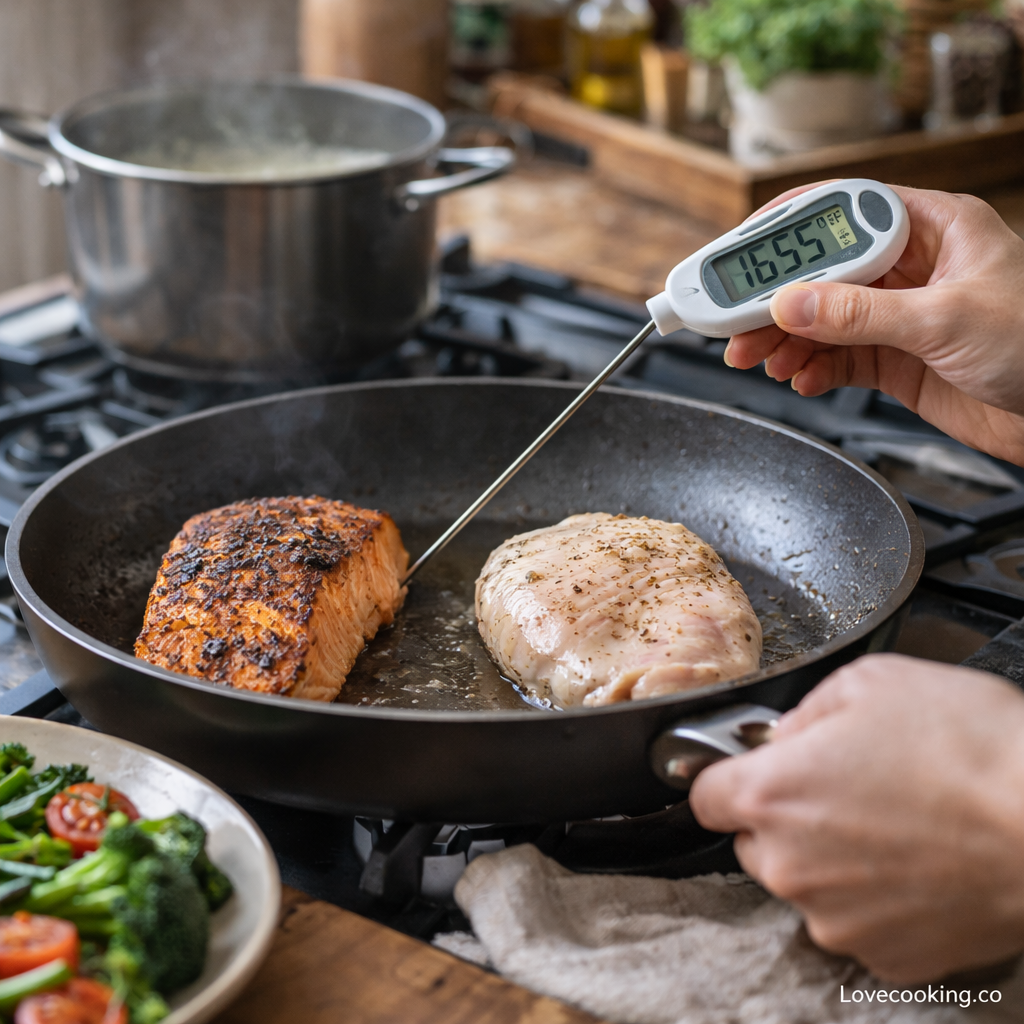
To fix the problem, you first need to understand it. Most cooking mistakes come from three simple things: timing, heat control, and attention.
Many people assume cooking is just about following time-based instructions like “cook for 10 minutes” or “boil for 15 minutes.” But food doesn’t always behave the same way every time. Stove strength, pot size, ingredient quantity, and even water temperature can change the result.
Here’s what usually causes issues:
- Cooking on heat that is too high or too low
- Not checking food while it cooks
- Relying only on timers without observation
- Adding ingredients at the wrong stage
- Not adjusting for quantity differences
For example, boiling vegetables for “10 minutes” might work in one kitchen but overcook them in another. That’s because boiling intensity varies.
The key realization is this: cooking is not a fixed formula—it’s a flexible process. Once you understand this, you stop relying only on time and start relying on signals.
Learning to Read Food Instead of Just Timing It
One of the most important cooking skills is learning to “read” food. Instead of blindly following a clock, you observe texture, color, aroma, and behavior.
This is where most beginners struggle, but it’s also where improvement happens quickly once you start paying attention.
Here are simple signs to observe:
Vegetables:
- Bright color fading slightly = nearly cooked
- Fork goes through easily = done
- Mushy texture = overcooked
Rice:
- Water fully absorbed = close to done
- Steam reducing significantly = finishing stage
- Grains soft but separate = perfect
Meat or chicken:
- Color change throughout = progressing
- Juices running clear = cooked
- Dry edges = slightly overcooked
Instead of asking, “How long should I cook this?” start asking, “What is it doing right now?”
When I started doing this, my cooking improved more in a week than in months of following strict timings. It felt like I finally understood what was happening in the pan instead of guessing.
Mastering Heat Control: The Most Underrated Cooking Skill
If there is one factor that determines whether food gets overcooked or undercooked, it’s heat control. Yet most home cooks barely think about it.
Heat is not just “low, medium, or high.” It is a tool that changes how food reacts.
Here’s a simple way to understand it:
- High heat: fast cooking, risk of burning outside and raw inside
- Medium heat: balanced cooking, best for most dishes
- Low heat: slow cooking, good for simmering and soft textures
The mistake many people make is using high heat to speed everything up. This often leads to burnt outsides and undercooked insides.
A better habit is adjusting heat based on stage:
- Start high (for boiling or initial frying)
- Reduce to medium (for steady cooking)
- Lower heat (for finishing or simmering)
For example, when cooking curry, starting on high heat helps build flavor quickly, but keeping it on medium allows ingredients to cook evenly.
Once you become aware of heat changes, your food becomes much more predictable and consistent.
Using the “Look, Smell, Touch” Method While Cooking
Professional cooks rarely rely only on time. Instead, they use sensory cues—what they see, smell, and sometimes even touch.
This is something anyone can learn at home.
Look:
Watch how food changes color, texture, and movement. Boiling slows down? Sauce thickens? These are signals.
Smell:
A raw smell usually fades as food cooks. When spices become aromatic, it often means they are properly heated.
Touch:
With practice, you can gently press food (like vegetables or dough) to check softness.
For example, when cooking onions, the shift from a sharp smell to a sweet aroma indicates they are cooked properly.
When I started trusting these senses instead of just timers, I stopped burning onions and stopped undercooking vegetables. It made cooking feel more natural and less mechanical.
The Importance of Cutting and Preparation in Cooking Accuracy
Many people don’t realize that overcooking and undercooking often start before cooking even begins. The way you cut and prepare ingredients directly affects how evenly they cook.
Uneven pieces are one of the biggest hidden causes of cooking mistakes.
For example:
- Large potato chunks cook slower than small ones
- Thick chicken pieces take longer than thin ones
- Uneven vegetable cuts lead to inconsistent cooking
A simple habit that helps is uniform cutting. Try to keep ingredients roughly the same size so they cook at the same speed.
Another helpful tip is pre-cooking preparation:
- Soak ingredients when needed (like rice or lentils)
- Pre-boil hard vegetables if required
- Marinate meat for even cooking
Once preparation becomes consistent, cooking becomes more predictable. You reduce the chances of having some pieces overcooked while others remain raw.
Timing Smarter Instead of Timing Blindly
Timers are useful, but they are not perfect. Relying only on timers often leads to mistakes because cooking conditions vary.
A better approach is “smart timing,” which combines time with observation.
Instead of saying
“Cook for 10 minutes”
Think:
“Check after 7–8 minutes and adjust based on condition”
This small change makes a huge difference.
Here’s a practical method:
- Set a timer as a reminder, not a final rule
- Check food a few minutes before expected time
- Adjust heat or cooking time based on observation
- Trust visual and texture cues over exact numbers
For example, when baking or simmering, checking early prevents overcooking disasters.
When I shifted from strict timing to flexible timing, I stopped ruining dishes just because I “waited too long.”
Common Cooking Mistakes That Lead to Overcooked or Raw Food
Most cooking errors are not random—they follow patterns. Once you recognize them, you can avoid them easily.
Some of the most common mistakes include:
- Leaving food unattended for too long
- Cooking everything on the same heat level
- Adding all ingredients at once
- Ignoring size differences in chopping
- Not stirring or checking food regularly
Another major issue is distraction. Even a few minutes away from the stove can change the outcome significantly, especially for quick-cooking foods.
A helpful habit is staying nearby during critical cooking stages. It doesn’t mean constant stirring—it means awareness.
Once you reduce these small mistakes, your cooking accuracy improves naturally without extra effort.
Building a Simple Routine for Consistent Cooking Results
Consistency in cooking comes from routine, not luck. When you follow a repeatable process, you reduce the chances of overcooking or undercooking.
A simple routine might look like this:
Before cooking:
- Prepare ingredients evenly
- Set appropriate heat level
- Keep tools ready
During cooking:
- Observe food regularly
- Adjust heat when needed
- Use sensory cues
After cooking:
- Check texture before turning off heat
- Allow food to rest if needed (especially meat or rice)
One important habit is “early checking.” Always check food slightly before you expect it to be done. This gives you control over the final result.
When I started using this routine, I stopped feeling anxious about cooking. Instead of hoping food turns out right, I started guiding it step by step.
Conclusion:
Avoiding overcooked or undercooked food is not about memorizing perfect timings or using complex techniques. It’s about learning to observe, adjust, and understand how food behaves while it cooks. When you pay attention to heat, texture, smell, and timing together—not separately—you start gaining control over your cooking instead of guessing your way through it.
Small habits like cutting ingredients evenly, checking food early, adjusting heat properly, and trusting your senses make a huge difference over time. Cooking becomes less stressful and far more reliable when you stop treating it like a fixed formula and start treating it like a flexible, responsive process.
FAQs
1. What is the main reason food gets overcooked at home?
The most common reason is leaving food unattended or using high heat without adjusting during cooking.
2. How can I tell if food is undercooked without cutting it too much?
You can check texture, color, and softness. For example, vegetables should be fork-tender and meat should lose raw color.
3. Is using a timer enough to cook food perfectly?
No, timers help but should be combined with observation because cooking conditions vary.
4. Why does my food cook unevenly?
Uneven cutting, inconsistent heat, and overcrowding the pan are common causes.
5. How can beginners avoid cooking mistakes easily?
Focus on learning heat control, checking food early, and practicing observation instead of relying only on recipes.