For a long time, my kitchen felt more stressful than helpful.
What started as a simple plan to cook dinner often turned into a mess—open drawers, missing tools, and that familiar moment of realizing something was burning while I searched for a spice jar.
At first, I assumed I just wasn’t organized enough as a person. But over time, I realized the issue wasn’t about being “messy.” It was about how my kitchen was set up.
Most kitchens are arranged based on categories—plates in one place, spices in another. That works for storage, but not always for cooking.
What made the biggest difference for me was shifting from a category-based to a workflow-based organization.
Instead of asking, “Where should this item go?” I started asking, “Where do I actually use this?”
That small change made cooking feel smoother, faster, and far less frustrating.
Why Kitchen Organization Matters More Than You Think
An organized kitchen isn’t about appearance—it’s about function.
When everything is placed with intention:
- You move less while cooking
- You spend less time searching
- You make fewer mistakes under pressure
- cooking feels more manageable
It doesn’t require a perfect setup. It just requires a system that works for you.
1. Creating Simple Zones That Match Your Workflow
One of the most helpful ideas I adopted was dividing the kitchen into small, practical zones.
Instead of grouping items by type, I grouped them by how I use them.
The Prep Area
This is where most of the work happens before cooking even begins.
What I keep here:
- cutting board
- knife and peeler
- a small space for scraps
Keeping these tools together means I can wash, peel, and chop without moving around too much.
The Cooking Area
This is the space around the stove.
Here, I keep:
- spatulas and spoons
- basic seasonings
- cooking oil
Having these within reach helps me stay focused while something is on heat.
Why This Works
Cooking becomes more fluid when everything you need is close by.
Instead of constantly stepping away, you stay in the moment—and that reduces both stress and mistakes.
2. Making Your Pantry Easier to Use
Before organizing my pantry, I often bought things I already had.
The issue wasn’t a lack of space—it was a lack of visibility.
Switching to Clear Storage
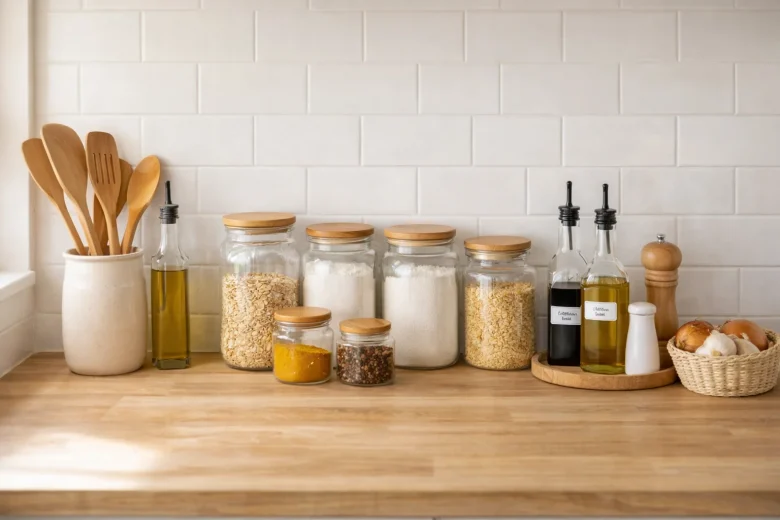
Moving dry ingredients into simple containers made a noticeable difference.
Now I can quickly see:
- What I have
- What I’m running low on
- What I need to use soon
Keeping It Practical
You don’t need fancy containers. The goal is simply to make items easier to access and identify.
Even a small improvement in visibility can save time and reduce waste.
3. Simplifying Your Spice Setup
Spices can easily become cluttered, especially when you collect more than you use.
I used to keep everything together, but it made cooking slower.
What Helped Me
I started separating spices based on how often I use them.
- frequently used spices → kept close to the stove
- rarely used spices → stored elsewhere
The Result
Instead of searching through dozens of jars, I now only see what I actually use regularly.
This makes cooking quicker and keeps the space less crowded.
4. Managing Kitchen Tools Without Overcrowding
It’s easy to collect kitchen tools over time, especially with so many options available.
But too many tools can create unnecessary clutter.
A Simple Rule I Follow
If I haven’t used something in a long time, I reconsider keeping it.
This doesn’t mean removing everything—it just means being mindful of what actually adds value.
Organizing by Use
I try to store tools based on how often I need them:
- daily-use items → easy to reach
- occasional items → stored in cabinets
- rarely used items → placed out of the way
This keeps the main workspace clear and functional.
5. Handling Waste Without Interrupting Your Flow
One thing that used to slow me down was dealing with scraps while cooking.
Walking back and forth to throw things away breaks your rhythm.
A Small Change That Helped
Keeping a small container nearby during prep made things easier.
Now I can:
- clear my workspace quickly
- Stay focused on the task
- Keep the counter organized
Why It Matters
Cooking feels smoother when you don’t have to stop repeatedly for small tasks.
6. The Importance of a Daily Reset
The biggest improvement in my kitchen didn’t come from buying anything—it came from a habit.
At the end of the day, I spend a few minutes resetting the space.
What That Includes
- clearing the counters
- putting things back in place
- making sure the sink is manageable
The Impact
Starting the next day with a clean kitchen makes a noticeable difference.
It removes friction and makes it easier to cook without hesitation.
7. Organizing the Fridge for Better Visibility
A cluttered fridge often leads to wasted food.
When things are hidden, they’re easily forgotten.
What Worked for Me
I started placing items based on how soon they need to be used.
- ready-to-eat or short-term items → front and center
- longer-lasting items → toward the back
A Simple Benefit
When everything is visible, you naturally use what you already have.
This reduces waste without requiring extra effort.
8. Keeping Track Without Overcomplicating
Sometimes the problem isn’t storage—it’s remembering what you need.
A Simple Approach
I keep a basic list of items I run out of.
Whenever something finishes, I note it down right away.
Why It Helps
- fewer duplicate purchases
- more efficient shopping
- less clutter at home
It doesn’t have to be digital or complex—just consistent.
9. Making Small Kitchens Work Better
Not everyone has a large kitchen, and that’s completely fine.
In smaller spaces, organization becomes even more important.
Using Vertical Space
Adding storage above counters or on walls can free up valuable space.
Examples include:
- hanging tools
- wall-mounted storage
- stacking containers
Keeping Surfaces Clear
The less clutter on your main workspace, the easier it is to cook.
Even a small, clear area can make a big difference.
10. Building a System That Fits Your Routine
There’s no single “perfect” kitchen setup.
What matters is creating a system that matches how you cook.
Questions That Help
- Where do I naturally reach while cooking?
- What do I use most often?
- What slows me down?
Answering these questions helps you organize your space in a way that feels natural.
Final Thoughts
Organizing your kitchen isn’t about perfection or appearance.
It’s about making everyday tasks easier.
When your space supports your routine:
- cooking feels less stressful
- You move more efficiently
- You enjoy the process more
For me, the biggest change came from small adjustments—not a complete overhaul.
If you want to improve your kitchen, start simple.
Clear one area. Move a few items closer to where you use them. Try one new habit.
Over time, those small changes turn into a system that works without effort.
And once that happens, cooking starts to feel less like a chore—and more like something you can actually enjoy.