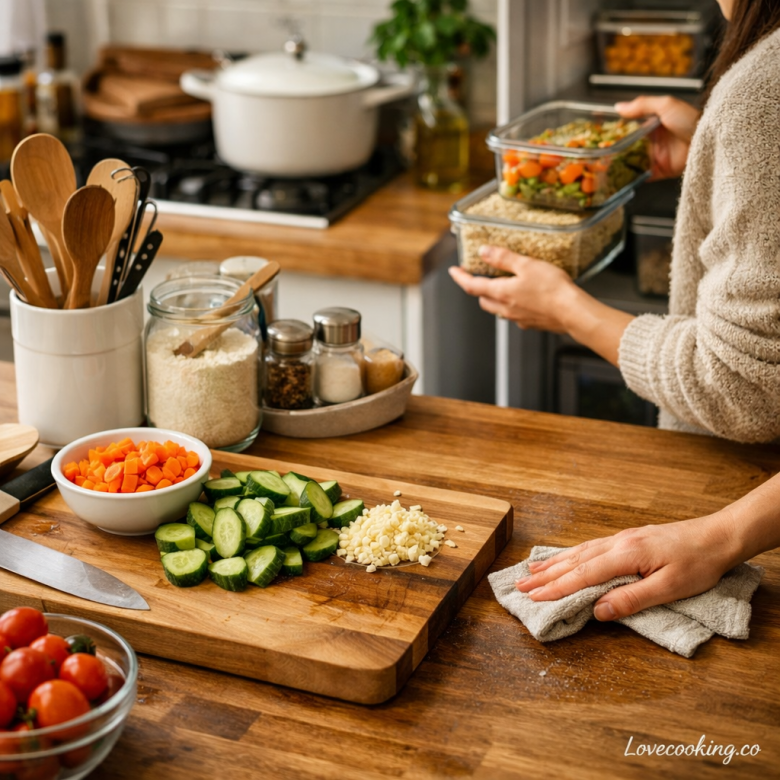
Cooking doesn’t have to feel like a chore. When I first started spending more time in the kitchen, I often found myself overwhelmed by cluttered counters, messy pans, and the stress of figuring out what to cook. Over time, I developed simple habits that transformed my kitchen routine, making cooking faster, easier, and far more enjoyable. In this guide, I’ll share practical, actionable habits that anyone can adopt to streamline their daily cooking.
Keep a Clean and Organized Workspace
One of the simplest habits that changed everything for me was maintaining a clean, organized kitchen. I used to cook in chaos, leaving knives, cutting boards, and ingredients scattered everywhere. It made even basic meals stressful.
How I Fixed It:
- Clear countertops before cooking.
- Keep frequently used tools within easy reach.
- Store ingredients logically—spices in one spot, oils together, and utensils near the stove.
Example: By keeping my prep area clean, I can chop vegetables, season meat, and sauté ingredients without juggling everything at once. It feels effortless and prevents mistakes.
Plan Meals Ahead of Time
I often wasted time staring at the fridge, unsure what to cook. This habit caused unnecessary stress and unhealthy last-minute choices.
How I Fixed It:
- Dedicate 10–15 minutes a week to meal planning.
- Make a rough outline of breakfasts, lunches, and dinners.
- Check pantry and fridge for available ingredients.
Practical Tip: Planning meals allows you to prep ingredients in advance, reducing cooking time and stress. I now prep my week’s stir-fry veggies or salad ingredients on Sunday, making weekday dinners quick and easy.
Prep Ingredients Before Cooking
Cooking without prepping ingredients first used to be my biggest mistake. I would start cooking, only to realize I forgot an essential ingredient or needed to chop something quickly.
How I Fixed It: Adopt the mise en place method:
- Wash, peel, and chop all vegetables in advance.
- Measure spices and liquids into small bowls.
- Keep everything ready near your cooking station.
Example: When making a simple pasta sauce, having onions diced, garlic minced, and tomatoes ready ensures smooth, stress-free cooking.
Keep Essential Tools and Ingredients Handy
I once spent 10 minutes hunting for a whisk and another 5 looking for olive oil—time I could have spent cooking.
How I Fixed It:
- Keep knives, cutting boards, spatulas, and measuring cups near the stove.
- Store frequently used spices, oils, and sauces in a visible, accessible area.
Practical Tip: Consider a small spice rack or drawer organizer. I keep olive oil, salt, pepper, and garlic powder within arm’s reach for almost every meal.
Use Simple, Multi-Purpose Recipes
Early in my cooking journey, I tried complicated recipes with dozens of ingredients. The result? Stress, mess, and meals that took too long.
How I Fixed It: Focus on simple recipes that are versatile and quick.
- One-pan meals: sauté veggies and protein together.
- Sheet-pan dinners: roast chicken and vegetables at once.
- Stir-fries and grain bowls: customizable and fast.
Example: A stir-fry with chicken, broccoli, bell peppers, and a basic soy-garlic sauce becomes a delicious, complete meal in 15 minutes.
Keep the Fridge and Pantry Stocked Wisely
Cooking is much easier when ingredients are available. I used to find myself mid-recipe without a key item.
How I Fixed It:
- Maintain staple ingredients: rice, pasta, canned beans, tomatoes, and frozen vegetables.
- Keep fresh produce that stores well: carrots, onions, zucchini, and bell peppers.
- Rotate ingredients to prevent spoilage.
Practical Tip: I organize my pantry by category so I can spot items quickly and plan meals around what’s available.
Cook in Batches
Batch cooking is a habit that saves time, reduces stress, and keeps meals consistent. Early on, I would cook each meal from scratch, which was time-consuming.
How I Fixed It:
- Prepare larger quantities of grains, beans, or proteins.
- Portion leftovers for future meals.
- Freeze meals in individual containers for busy days.
Example: Roasting a whole tray of vegetables and cooking extra quinoa on Sunday gives me ready-to-use ingredients for salads, wraps, or stir-fries all week.
Clean as You Go
I used to leave washing until after cooking, which made the kitchen chaotic and overwhelming.
How I Fixed It: Adopt the “clean-as-you-go” habit:
- Wash cutting boards and knives immediately after use.
- Wipe counters between tasks.
- Keep a bowl or tray for scraps to prevent clutter.
Practical Tip: A clean kitchen makes cooking more enjoyable and reduces post-meal cleanup time drastically.
Embrace the Power of Freezer-Friendly Meals
Frozen meals aren’t just for convenience—they’re a lifesaver when time is tight.
How I Fixed It:
- Cook double portions and freeze leftovers in airtight containers.
- Freeze chopped vegetables or pre-cooked grains for quick use.
- Label and date all frozen items to stay organized.
Example: I freeze extra marinara sauce in 1-cup portions. On busy nights, I just thaw and pour over pasta or baked chicken.
Use Time-Saving Kitchen Tools
Technology can make cooking easier. I used to chop, peel, and sauté everything manually, which was time-consuming.
Helpful Tools:
- Food processor for chopping and pureeing.
- Mandoline slicer for uniform cuts.
- Slow cooker or Instant Pot for hands-off cooking.
- Microplane for zesting and grating.
Practical Tip: Even simple tools like a good peeler or garlic press save valuable minutes during meal prep.
Learn Simple Seasoning Tricks
Seasoning can transform meals but doesn’t have to be complicated. Early on, I under-seasoned dishes, making them taste bland.
How I Fixed It:
- Season in layers: during cooking, after cooking, and before serving.
- Balance flavors with acid (lemon juice, vinegar), salt, fat, or spices.
- Taste frequently to adjust as needed.
Example: For roasted vegetables, I toss them in olive oil, salt, pepper, and a splash of balsamic vinegar—simple, fast, and flavorful.
Make Leftovers Work for You
I used to throw away leftovers, which wasted time and money. Learning to repurpose them became a game-changer.
How I Fixed It:
- Transform yesterday’s roasted chicken into today’s salad or wrap.
- Use leftover rice for stir-fries or fried rice.
- Freeze extra portions for future meals.
Example: I often turn leftover roasted vegetables into a frittata for breakfast the next morning—a quick, delicious solution.
Keep a Cooking Routine
Consistency makes daily cooking easier. I noticed that when I followed a loose routine, meals came together effortlessly.
How I Fixed It:
- Prep ingredients at the same time each day or week.
- Cook staple items on a schedule, like rice or roasted veggies.
- Set a timer for tasks to stay on track.
Practical Tip: My weekday routine involves prepping vegetables after breakfast so I can cook dinner quickly without scrambling.
Make Cleanup Easy
Cooking is easier when you minimize the mess. I used to dread dishes piling up in the sink.
How I Fixed It:
- Use fewer pots and pans with one-pot or sheet-pan meals.
- Line baking sheets with foil or parchment paper.
- Soak pans and utensils immediately after use.
Example: A one-pan roasted chicken and veggies dinner means fewer dishes and less stress at the end of the day.
Conclusion
Simple kitchen habits can drastically improve your daily cooking experience. From keeping your workspace organized, planning meals, and prepping ingredients, to cooking in batches, cleaning as you go, and learning basic seasoning tricks, these habits save time, reduce stress, and make meals more enjoyable. Over time, these practices become second nature, allowing you to cook efficiently while still experimenting and enjoying the process. By adopting just a few of these habits, anyone can transform cooking from a daily chore into a satisfying, stress-free activity.
FAQs
1. How can I make cooking faster every day?
Prep ingredients in advance, use batch cooking, and keep essential tools within reach to reduce time in the kitchen.
2. What’s the easiest habit for beginners to start with?
Keeping a clean and organized workspace. Clear counters and prep tools before cooking to make everything smoother.
3. How can I reduce post-cooking cleanup?
Cook one-pot or sheet-pan meals, line baking sheets with foil, and clean as you go.
4. How do I make leftover ingredients useful?
Repurpose leftovers into new meals, freeze extra portions, and use versatile ingredients in multiple dishes.
5. Are meal plans really necessary for easier cooking?
Not strictly, but planning meals ahead saves time, prevents stress, and ensures you have the ingredients needed for quick, balanced meals.