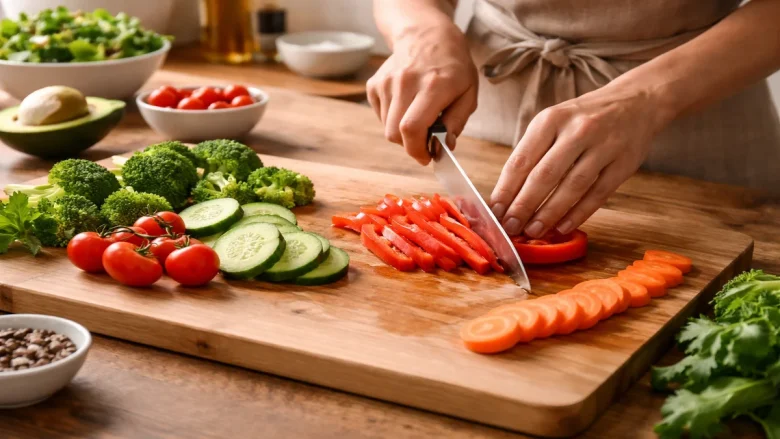
Cutting and preparing vegetables might seem simple, but it’s one of the most essential skills in the kitchen. When I first started cooking, I often struggled with uneven cuts, inconsistent cooking, and wasted produce. Over the years, I’ve learned practical techniques that not only make vegetables look better but also enhance flavor, texture, and cooking efficiency. In this guide, I’ll share everything I’ve learned about cutting and preparing vegetables the right way.
Understanding Why Proper Cutting Matters
At first, I didn’t realize that the way vegetables are cut affects more than just appearance. Uniform cuts ensure even cooking, which prevents some pieces from being overcooked while others remain raw. Proper preparation also enhances flavor absorption, particularly when marinating or sautéing.
Personal Example: When I made stir-fry early on, my carrots were thick slices, and the bell peppers were thin strips. Half the vegetables were undercooked, and the dish felt unbalanced. After learning proper cutting techniques, my stir-fry cooked evenly and tasted more harmonious.
Choosing the Right Knife
The first step in cutting vegetables the right way is using the right tool. A sharp, high-quality knife is essential. I used to struggle with dull knives, which made chopping frustrating and dangerous.
Knife Types to Know:
- Chef’s Knife: Versatile for most chopping, slicing, and dicing.
- Paring Knife: Perfect for peeling and trimming small vegetables.
- Serrated Knife: Best for tomatoes or soft-skinned vegetables.
Tip: Keep your knives sharp. Dull knives are more dangerous because they slip and require extra force.
Mastering Basic Knife Techniques
Learning how to hold and move a knife properly makes all the difference.
Knife Grip: I learned to pinch the blade near the handle with my thumb and index finger while wrapping the other fingers around the handle. This provides stability and control.
Cutting Techniques:
- Chopping: Quick, straight cuts, often for larger vegetables like onions or peppers.
- Dicing: Uniform small cubes, ideal for soups, stews, or salads.
- Julienne: Thin, matchstick-like strips, perfect for stir-fries or garnishes.
- Mincing: Extremely fine cuts, usually for garlic, herbs, or ginger.
- Chiffonade: Thin ribbons, ideal for leafy greens or basil.
Practical Example: I used to slice onions unevenly, resulting in raw chunks and burnt pieces in my curry. Once I learned to dice onions uniformly, my dishes cooked evenly and looked professional.
Prepping Vegetables Properly
Before cutting, cleaning and prepping vegetables is crucial. Rinsing removes dirt, pesticides, and bacteria, while peeling or trimming ensures the best texture and flavor.
Steps I Follow:
- Wash all vegetables under running water.
- Remove stems, seeds, or skins if needed.
- Pat dry to prevent slipping while cutting.
Example: When preparing bell peppers for a stir-fry, I remove the seeds and core, which improves taste and ensures even cooking.
Cutting Root Vegetables
Root vegetables like carrots, potatoes, and beets require careful cutting because of their density. I used to cut carrots randomly, which led to uneven cooking.
Tips for Root Vegetables:
- Cut into uniform sizes to ensure even roasting or boiling.
- Slice thinly for quick cooking or julienne for stir-fries.
- Use a peeler to remove skin evenly.
Example: For roasted potatoes, I now cut them into evenly sized cubes, toss in olive oil and seasoning, and roast. The result is perfectly crispy and tender pieces every time.
Cutting Leafy Greens and Herbs
Leafy greens and herbs are delicate, so proper cutting preserves flavor and texture. I used to roughly tear basil or spinach, which sometimes bruised the leaves and reduced flavor.
Tips:
- Stack leaves, roll them tightly, and slice into thin ribbons for chiffonade.
- Use a sharp knife to prevent crushing.
- Wash thoroughly to remove sand and grit, especially with spinach or kale.
Example: Chiffonade basil on homemade pizza adds both visual appeal and an even burst of flavor.
Handling Alliums (Onions, Garlic, Leeks)
Alliums add essential flavor but can be tricky to handle. I remember tearing up every time I chopped onions incorrectly.
Techniques I Learned:
- Cut off root and stem ends, peel the skin, and slice vertically before horizontal cuts.
- For garlic, crush cloves lightly with a knife to peel easily, then mince.
- Use a sharp knife to reduce tearing and improve precision.
Tip: Chill onions in the fridge for 10–15 minutes before cutting to reduce tears.
Preparing Tomatoes and Soft Vegetables
Soft vegetables require gentle handling. I used to squish tomatoes while slicing, which wasted juice and made my salad messy.
Tips:
- Use a serrated knife for tomatoes, peppers, or eggplants.
- Cut in smooth, steady motions without applying excessive pressure.
- Remove cores or seeds if the recipe calls for it to improve texture and presentation.
Example: For bruschetta, I slice tomatoes evenly with a serrated knife and dice them for uniform topping.
Cutting Techniques for Quick Cooking
Some dishes require quick, uniform cuts to cook evenly in a short time. I learned that the size and shape of vegetables affect cooking speed.
Examples:
- Julienne carrots or bell peppers for stir-fry—they cook in 2–3 minutes.
- Thinly slice zucchini or squash for sautéing.
- Small dice onions for soups—they soften quickly and integrate better.
Practical Tip: Decide on the cooking method first, then choose the appropriate cut.
Using a Cutting Board Safely
Cutting boards prevent slipping and cross-contamination. I used to use the same board for raw meat and vegetables, which was risky.
Tips:
- Use separate boards for raw meat and vegetables.
- Choose a board with a non-slip base or place a damp towel underneath.
- Clean and sanitize after use.
Example: I keep a wooden board for vegetables and a plastic board for raw meat, reducing contamination and protecting flavors.
Storing Prepped Vegetables
Proper storage prolongs freshness and reduces waste. I learned the hard way that pre-cut vegetables can spoil quickly if stored incorrectly.
Tips:
- Store leafy greens in airtight containers with paper towels to absorb moisture.
- Keep chopped vegetables in separate containers in the fridge.
- Use herbs quickly or freeze them in ice cube trays with water or oil.
Practical Example: Prepping all stir-fry vegetables in containers allows me to cook quickly after work without extra prep time.
Avoiding Common Mistakes
I made plenty of mistakes while learning to prep vegetables. Here are the most common and how I fixed them:
- Uneven cuts: Leads to uneven cooking → Use proper knife techniques and measure pieces.
- Bruising delicate greens: Reduces flavor → Handle lightly, use sharp knife, chiffonade method.
- Over-peeling: Wastes nutrients → Only remove skin when necessary.
- Cross-contamination: Unsafe food → Separate cutting boards for raw meat and vegetables.
- Improper storage: Causes spoilage → Store in airtight containers or wrap in damp paper towels.
Tips to Speed Up Vegetable Prep
Efficiency in the kitchen comes from smart prep. Here’s what I do now:
- Batch Prep: Chop vegetables for the week ahead and store properly.
- Use Mandoline Slices for Uniformity: Perfect for thin cuts like cucumber or zucchini.
- Invest in a Good Peeler: Saves time peeling carrots, potatoes, or squash.
- Organize Your Workspace: Keep knives, cutting boards, and containers nearby.
Example: On Sundays, I prep all vegetables for weekday dinners. Dinner takes half the time and tastes fresh.
Conclusion
Cutting and preparing vegetables the right way is about more than just aesthetics—it ensures even cooking, enhances flavor, and makes your kitchen experience smoother. By using the right knives, mastering techniques, and prepping properly, you can transform simple ingredients into delicious, visually appealing meals. With practice, these skills become second nature, and cooking becomes faster, safer, and more enjoyable. The key is patience, practice, and understanding the principles behind each cut.
FAQs
1. What is the best knife for cutting vegetables?
A sharp chef’s knife is the most versatile, suitable for chopping, slicing, and dicing most vegetables.
2. How can I prevent onions from making me cry?
Chill onions before cutting, use a sharp knife, and cut near a vent or fan to reduce tears.
3. Should I peel all vegetables before cooking?
Not always. Many skins have nutrients and flavor. Peel only when necessary for texture or recipe requirements.
4. How do I store pre-cut vegetables to keep them fresh?
Use airtight containers, wrap leafy greens in damp paper towels, and store in the fridge to maintain freshness.
5. How can I make vegetable prep faster?
Batch prep for the week, use a mandoline for uniform slices, and organize your workspace for efficiency.