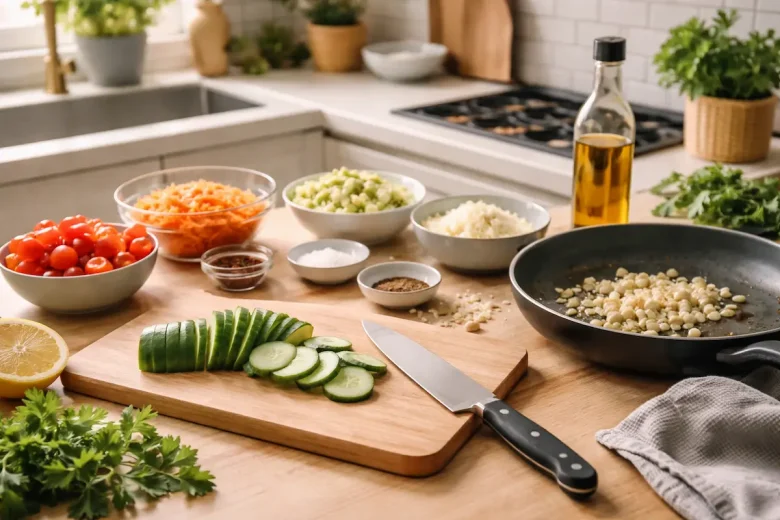
Learning to cook can feel overwhelming at first. The kitchen is full of utensils, ingredients, and techniques that seem intimidating. But the truth is, cooking is a skill like any other—it can be learned step by step. When I started, I focused on mastering basic skills that form the foundation for everything else. Over time, these basics allowed me to create simple, healthy, and satisfying meals without stress.
In this article, I’ll share the essential cooking skills every beginner should learn first. These are practical, easy to apply, and will give you the confidence to cook anything from a quick breakfast to a full dinner.
Understanding Your Kitchen
Before you even pick up a knife, it’s important to familiarize yourself with your kitchen. Knowing where everything is and how it works makes cooking much easier and less stressful.
Key Points:
- Identify your tools: Knives, cutting boards, pots, pans, and measuring cups are essential.
- Understand your appliances: Learn the basics of your stove, oven, blender, and microwave.
- Organize ingredients: Keep pantry staples like rice, pasta, canned beans, and spices within reach.
A well-organized kitchen lays the foundation for smooth, confident cooking.
Knife Skills
Learning how to handle a knife safely is one of the most important skills for beginners. A sharp knife is safer than a dull one, and mastering basic cuts makes meal prep faster and more efficient.
Essential Knife Skills:
- Chopping: Small, even pieces for vegetables like onions and carrots.
- Slicing: Thin or thick slices for items like tomatoes or cucumbers.
- Dicing: Even, small cubes for dishes like soups and stews.
- Mincing: Tiny pieces for garlic, herbs, or ginger.
Tip: Use a stable cutting board and curl your fingers inward on the hand holding the food. This “claw grip” keeps your fingers safe.
Understanding Ingredients
A key part of cooking is knowing your ingredients. Understanding flavors, textures, and how foods cook helps beginners create balanced meals.
What to Learn About Ingredients:
- Vegetables: Know which cook quickly (spinach, zucchini) and which take longer (carrots, potatoes).
- Proteins: Learn cooking times for chicken, fish, eggs, tofu, and beans.
- Herbs and Spices: Understand basic herbs like basil, parsley, and thyme, and spices like paprika, cumin, and black pepper.
- Grains and Legumes: Know cooking times and water ratios for rice, quinoa, lentils, and beans.
Familiarity with ingredients reduces mistakes and builds confidence in the kitchen.
How to Boil, Steam, and Simmer
These are fundamental cooking techniques that every beginner should master. They are simple but versatile.
Boiling:
- Used for pasta, potatoes, and eggs.
- Tip: Salt the water for flavor and avoid overcooking.
Steaming:
- Preserves nutrients in vegetables and fish.
- Tip: Use a steaming basket over simmering water.
Simmering:
- Ideal for soups, stews, and sauces.
- Tip: Keep the heat low to prevent boiling over and to allow flavors to develop.
These methods are safe and easy, and they build the foundation for more advanced cooking.
Basic Sautéing
Sautéing is a quick method to cook vegetables, proteins, and aromatics with minimal oil. Mastering sautéing helps beginners make flavorful meals fast.
How to Sauté:
- Preheat the pan before adding oil.
- Add aromatics like garlic or onion first for flavor.
- Cook proteins or vegetables until lightly browned.
- Stir frequently to prevent burning.
Sautéing is the foundation for stir-fries, pasta sauces, and many weeknight dinners.
Making Simple Sauces
Even beginners can make sauces that elevate meals. Simple sauces add flavor and moisture without complicated steps.
Easy Beginner Sauces:
- Tomato Sauce: Sauté garlic and onions, add canned tomatoes, and season with salt, pepper, and herbs.
- Vinaigrette: Mix olive oil, vinegar or lemon juice, salt, and pepper.
- Pan Sauce: After cooking meat, deglaze the pan with broth or wine, and add herbs and a small amount of butter or cream.
Learning sauces makes meals taste professional without requiring advanced techniques.
Cooking Proteins Safely
Cooking proteins to the correct temperature ensures safety and taste. Beginners should know the basics for meat, fish, and eggs.
Key Tips:
- Chicken: Cook until no pink remains; internal temperature 165°F (74°C).
- Fish: Cook until opaque and flakes easily.
- Eggs: Boiled, scrambled, or fried—ensure yolks are cooked if desired.
- Tofu: Press before cooking to remove excess water; sauté, bake, or grill for flavor.
Understanding protein basics helps prevent undercooked or overcooked meals.
Baking Basics
Even if you don’t bake often, knowing simple baking skills expands your meal options.
Beginner Baking Skills:
- Mixing dry and wet ingredients properly to prevent lumps.
- Using a timer and oven thermometer to ensure even cooking.
- Measuring ingredients accurately for consistent results.
Simple baking projects like muffins, roasted vegetables, or sheet-pan meals are great starting points.
Seasoning and Flavor Balancing
Seasoning is what separates good meals from great ones. Learning how to use salt, pepper, herbs, and acids is essential for beginners.
Tips for Flavor:
- Salt early and taste often to enhance natural flavors.
- Use acids like lemon juice or vinegar to brighten dishes.
- Combine textures and flavors for balanced meals: crunchy, soft, sweet, savory, or tangy.
Flavor confidence grows with practice, and it’s one of the most satisfying beginner skills.
Meal Assembly and Presentation
Even if you’re new, arranging food on a plate improves the dining experience. A presentation doesn’t have to be complicated.
Beginner Presentation Tips:
- Use colorful vegetables to make meals visually appealing.
- Place protein in the center, surrounded by vegetables and grains.
- Sprinkle herbs, seeds, or nuts for garnish.
Well-presented meals make eating at home more enjoyable and encourage consistency in cooking.
Reading Recipes Effectively
Beginners often struggle with recipes. Learning to read recipes correctly saves time and reduces mistakes.
Key Steps:
- Read the recipe entirely before starting.
- Gather all ingredients and tools before cooking.
- Understand cooking times and techniques mentioned.
- Adjust as needed for portion size, dietary needs, or ingredient substitutions.
Good recipe reading builds confidence and prevents frustration.
Timing and Multitasking
Managing time in the kitchen is crucial for stress-free cooking. Beginners should learn how to multitask efficiently.
Tips for Timing:
- Start with items that take the longest (like grains or roasting vegetables).
- Prepare aromatics while proteins cook.
- Use a timer for multiple tasks to avoid overcooking.
With practice, multitasking becomes intuitive and reduces meal prep stress.
Cleaning as You Go
Beginners often underestimate kitchen cleanup, but cleaning as you cook keeps the workspace organized and reduces stress.
Strategies:
- Wash cutting boards and knives immediately after use.
- Wipe counters while food cooks.
- Put unused ingredients away to prevent clutter.
A clean kitchen makes cooking more enjoyable and sustainable.
Experimenting Safely
Once you master the basics, experimenting is fun and builds confidence. Beginners can try new ingredients, spices, or cooking methods without fear.
Beginner-Friendly Experiments:
- Swap vegetables or grains in familiar dishes.
- Try a new spice blend or herb.
- Combine cooking methods like roasting and then sautéing for flavor.
Experimenting develops intuition and creativity in cooking.
Practical Beginner Meal Examples
To put these skills into action, here are a few beginner-friendly meals:
- Breakfast: Scrambled eggs with spinach and cherry tomatoes.
- Lunch: Quinoa salad with roasted vegetables and chickpeas.
- Dinner: Sheet-pan chicken with carrots, zucchini, and potatoes.
- Snack: Apple slices with peanut butter or a small bowl of nuts.
Each of these meals incorporates basic skills: chopping, sautéing, roasting, seasoning, and assembly.
Benefits of Learning Basic Cooking Skills
Mastering these skills has changed my approach to eating at home:
- Reduced reliance on processed or takeout foods.
- Improved confidence and independence in the kitchen.
- Healthier, more balanced meals.
- Reduced stress around meal preparation.
- Flexibility to try new recipes and cuisines.
The foundation of cooking basics opens the door to endless possibilities.
Conclusion
Learning basic cooking skills is the first step toward enjoying home-cooked meals. Knife skills, sautéing, boiling, steaming, seasoning, and meal assembly are essential building blocks that make cooking easier and more enjoyable. With practice, patience, and organization, beginners can confidently prepare healthy, flavorful meals. Mastering these foundational skills empowers you to explore new recipes, adapt meals to your preferences, and build a lifelong habit of cooking at home.
FAQs
1. What is the first skill every beginner should learn?
Knife skills and safe handling of tools are the first and most essential skills to master.
2. How can I make cooking less stressful as a beginner?
Plan meals, prep ingredients in advance, and clean as you go.
3. Do I need many utensils to start cooking?
No. A few basic knives, cutting boards, pots, pans, and measuring tools are enough.
4. How do I prevent meals from being bland?
Use salt, pepper, herbs, spices, and acids like lemon juice to enhance flavor.
5. Can beginners cook healthy meals easily?
Yes. Mastering basic techniques and ingredients allows you to prepare nutritious, balanced meals quickly.