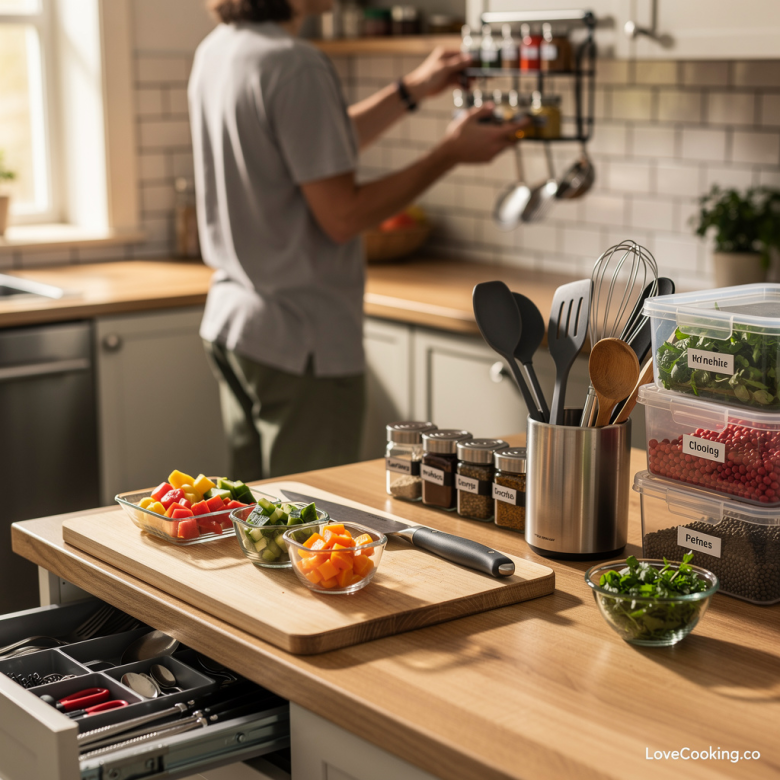
There was a time when I genuinely believed cooking was the problem. I would look at recipes and think, “This takes too long,” or “I don’t have time for this.” But the real issue wasn’t the food or the cooking—it was the kitchen itself. My setup was simple but inefficient. I’d spend minutes searching for spices, moving things around just to find space, and cleaning the same counter again and again because nothing had a proper place. Cooking didn’t feel hard because of the food; it felt hard because the environment wasn’t helping me.
That realization changed everything. I didn’t need a new skill or expensive appliances. I needed small, thoughtful changes in how my kitchen was organized and used. And that’s exactly what this guide is about—simple kitchen changes that make cooking faster, smoother, and surprisingly more enjoyable without turning your home into a professional setup.
Creating a “Flow-Friendly” Kitchen Layout That Saves Minutes Every Day
One of the biggest hidden reasons cooking feels slow is poor kitchen flow. If your ingredients, tools, and cooking space are scattered without logic, every meal becomes a series of unnecessary movements.
A flow-friendly kitchen doesn’t require remodeling. It simply means organizing your space based on how you actually cook.
Think of your kitchen in zones:
- Prep zone: cutting board, knives, bowls
- Cooking zone: stove, pans, spatula
- Storage zone: spices, oil, basic ingredients
- Cleaning zone: sink, detergent, cloth
When these zones are clear, your movements become natural instead of chaotic.
For example, if your spices are far from the stove, you’ll constantly walk back and forth while cooking. That small movement repeated ten times in one meal becomes real wasted time.
I remember reorganizing my kitchen so that everything I used daily was within arm’s reach of the stove. The result was immediate—I wasn’t “running around” anymore. Cooking started feeling calmer and faster without me trying harder.
Keeping Everyday Ingredients Within Easy Reach Instead of Hidden Away
A surprising amount of cooking delay comes from simply searching for ingredients. You know you have salt, oil, and spices—but finding them in cluttered cabinets slows everything down.
A simple change that makes a huge difference is creating a “daily use zone.”
This is a small, accessible space where you keep:
- Cooking oil
- Salt and basic spices
- Frequently used sauces or condiments
- Tea/coffee essentials (if relevant)
Instead of opening multiple shelves during cooking, everything is already available.
Another helpful habit is transparent or labeled containers. When you can see what you have, you stop wasting time opening and checking multiple jars.
A personal example: I used to keep spices in a closed cabinet. Half the time, I’d open three jars before finding the right one. When I switched to a small open spice rack, cooking instantly became smoother.
Small visibility changes create big speed improvements.
Upgrading Your Tools Without Overcrowding Your Kitchen
It’s easy to think that faster cooking means buying more tools. But the truth is, too many tools often slow you down instead of helping.
The real improvement comes from choosing the right basic tools and using them consistently.
A few essentials that make cooking easier:
- A sharp, reliable chef’s knife
- One large cutting board (instead of multiple small ones)
- A non-stick pan for quick meals
- A sturdy pot for boiling and stews
- Measuring spoons for consistency
The mistake many people make is switching tools constantly. Every extra pan or utensil adds cleanup time later.
When I simplified my kitchen tools, something interesting happened—I spent less time deciding what to use and more time actually cooking. That mental clarity is just as important as physical speed.
Less clutter doesn’t just save space. It saves attention.
The Power of Pre-Setup: Preparing Before You Turn on the Stove
One of the biggest kitchen transformations happens before cooking even starts. Most delays occur because cooking begins before preparation is complete.
A small but powerful habit is “pre-setup cooking.”
Before turning on the stove:
- Wash and chop all ingredients
- Keep spices measured and ready
- Arrange utensils near your workspace
- Clear unnecessary items from the counter
This prevents mid-cooking interruptions like searching for ingredients or chopping while something is burning.
A simple example: if you’re cooking rice and curry, preparing everything first means you can focus entirely on cooking instead of multitasking chaotically.
When I started doing this, I realized something important: I wasn’t actually slow at cooking—I was just constantly interrupted.
Pre-setup removes those interruptions completely.
Smart Storage Habits That Reduce Daily Kitchen Stress
Storage is one of the most underrated factors in cooking speed. If your kitchen storage is confusing or inconsistent, every cooking session becomes a search mission.
A smarter storage system doesn’t need expensive cabinets. It needs logic.
Try organizing your kitchen like this:
- Daily items in front or eye level
- Rarely used items in higher or lower spaces
- Similar items grouped together
- Frequently used utensils in one easy drawer
Even small changes like grouping spices or keeping all cooking oils in one place can save noticeable time.
Another practical tip is avoiding overstuffed cabinets. When everything is packed tightly, you waste time shifting items just to reach what you need.
I once rearranged a single drawer in my kitchen, and it reduced my cooking frustration more than I expected. That’s how powerful simple organization can be.
Designing a Cleaning System That Works While You Cook
A messy kitchen slows everything down. But the real issue is not mess—it’s delayed cleaning.
Instead of cleaning everything after cooking, a better approach is integrating cleaning into your cooking flow.
Simple habits that help:
- Keep a small bowl for waste while cooking
- Wash utensils immediately after light use
- Wipe spills as they happen
- Clean prep space while waiting for food to cook
This doesn’t mean stopping cooking. It means using natural pauses wisely.
For example, while something simmers, you can quickly clear the cutting board or rinse used utensils.
When I adopted this habit, I stopped ending cooking sessions with a sink full of dishes. Instead, cleanup became small and manageable.
A clean workspace also improves focus. You cook better when your environment feels controlled.
Reducing Decision Fatigue with Simple Meal Structure
One reason cooking feels slow is not physical work—it’s decision fatigue. Every day asking “What should I cook?” slows you down before you even begin.
A small kitchen change that helps is having a loose meal structure instead of strict planning.
For example:
- 2–3 rotating breakfast options
- 3–4 simple lunch/dinner combinations
- A few emergency quick meals (eggs, pasta, rice dishes)
This reduces thinking time significantly.
When I started doing this, cooking became automatic. I wasn’t deciding every day from zero—I was simply choosing from a small, familiar list.
That mental simplicity directly translates into faster cooking.
Less thinking equals faster action.
Building a Kitchen Environment That Encourages Speed Without Pressure
Speed in cooking is not about rushing—it’s about ease. A well-designed kitchen naturally makes you faster without stress.
Small environmental changes that help:
- Good lighting over cooking and prep areas
- Clear counter space for active cooking
- Easy access to frequently used tools
- A small timer or phone stand for tracking cooking time
- Comfortable standing space without clutter
Even something as simple as better lighting can improve accuracy and reduce mistakes, which indirectly speeds up cooking.
I noticed that when my kitchen felt open and organized, I moved more confidently. I wasn’t hesitating or double-checking everything. A good environment removes friction from every step.
Conclusion
Making cooking faster and easier doesn’t require dramatic changes or professional tools. It comes from small, thoughtful adjustments in how your kitchen is organized, how your habits are structured, and how your space supports your daily routine.
When you create a logical kitchen layout, keep essential ingredients within reach, simplify your tools, prepare before cooking, and build small cleaning habits into your process, everything starts flowing naturally. Cooking becomes less about effort and more about rhythm. Instead of feeling rushed or overwhelmed, you feel in control. The most powerful realization is this: your kitchen either slows you down or supports you—but small changes can completely shift that balance.
FAQs
1. What is the easiest kitchen change to improve cooking speed?
Keeping daily-use ingredients within easy reach is the simplest and most effective change.
2. Do I need expensive tools to cook faster?
No, using a few basic, well-chosen tools is more effective than having many unused gadgets.
3. How does kitchen organization affect cooking time?
A well-organized kitchen reduces searching, movement, and confusion, which naturally speeds up cooking.
4. Why does cooking feel slow even for simple meals?
It often happens due to clutter, poor preparation, and lack of workflow planning rather than the recipe itself.
5. Can small changes really make a big difference in cooking?
Yes, even minor adjustments like pre-setup habits or better storage can significantly improve cooking speed and ease.